

We now have a second report of dairy cattle infected with H5N1 genotype D1.1, the bird flu strain circulating in wild birds. This is different than the genotype B3.13 viruses circulating through dairy cattle herds.
Arizona reports H5N1 genotype D1.1:
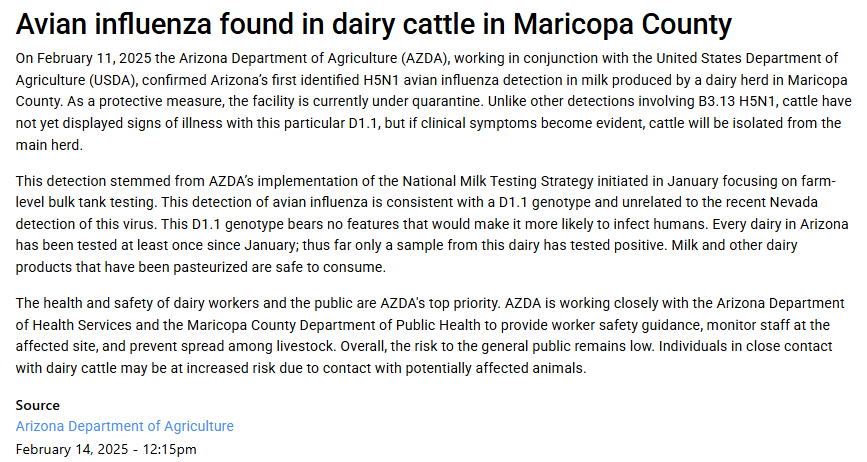
On Friday, February 14, the health department of Maricopa County, Arizona issued a press release reporting the first detection of H5N1 genotype D1.1 in dairy cattle in the state. The virus was detected through bulk milk testing.
The Maricopa County press release reads as follows:
The D1.1 version of the H5N1 virus is circulating through wild birds, while the B3.13 genotype has been the predominant version circulating through dairy cattle herds.
The discovery of H5N1 genotype D1.1 in Arizona closely follows the first known detection of H5N1 genotype D1.1 in dairy cattle, only nine days before, in Nevada. Indeed, on February 5, 2025, the USDA reported that the D1.1 genotype had been found in a dairy cattle herd in Churchill County, Nevada.
We looked at the implications of finding genotype D1.1 in cattle previously, in Nevada dairy cattle infected with different H5N1 bird flu strain. Finding it in more dairy cattle in a different state adds to those implications.
Finding genotype D1.1 in cattle suggests spillover from birds:
The key is that the presence of genotype D1.1 in cattle makes it probable, if not a certainty, that there have been additional spillover events between wild birds and dairy cattle.
Until the recent Nevada cattle infections, it was thought that a single spillover from birds to dairy cattle in Texas started the ongoing H5N1 cattle outbreaks. The virus then spread between cattle and cattle farms aided especially by the ongoing interstate transport of dairy cattle. The cattle viruses have all been of genotype B3.13, while the H5N1 viruses found in wild birds and poultry farms have been D1.1.
To find H5N1 genotype D1.1 in dairy cattle again suggests exposure between infected birds and those cattle. At least that would seem the most likely theory of how cattle got infected with D1.1. There is always the chance that some intermediary host infected with D1.1 infected the cattle, but the health authorities seem confident this is another spillover from wild birds.
The USDA addresses genotype D1.1 in Arizona:
As to the Arizona outbreak, later in the afternoon on February 14, the USDA published a statement on the recent detection of genotype D1.1 in Arizona cattle, which seems to confirm this idea of further spillover events.
The USDA press release states as follows:
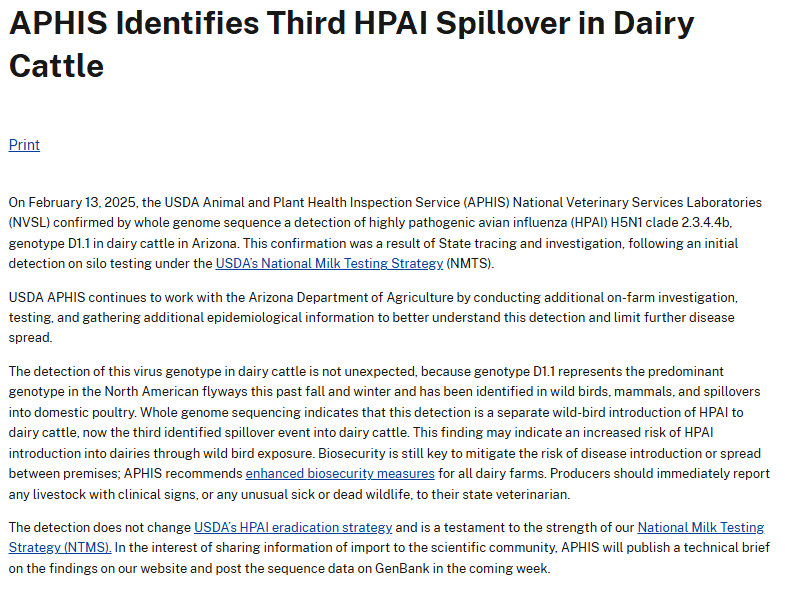
Notably, the USDA drew focus to ongoing interactions between wild birds and livestock, stating that “genotype D1.1 represents the predominant genotype in the North American flyways this past fall and winter and has been identified in wild birds, mammals, and spillovers into domestic poultry.”
Genotype D1.1 and the implications for animal and human health:
What this really means is dairy farmers have to be even more careful and vigilant in their biosecurity measures, now that we are seeing infections crop up presumably directly from wild birds. Increased spillover from birds is an exposure route in addition to the cattle and farm transmissions we’ve already seen throughout this outbreak. Indeed, as noted by the USDA, this new genotype D1.1 detection “may indicate an increased risk of HPAI introduction into dairies through wild bird exposure.”
One other item of concern is that genotype D1.1 has shown to produce more severe human infections in some cases. Although that does not mean that all infections with genotype D1.1 are severe, and there have been over a dozen such human cases all of which were mild. However, two recent severe human cases, one of which proved fatal (the Louisiana case) and the other requiring a lengthy hospitalization before surviving (the Canada case). Moreover, it was only a few days ago that another human case with genotype D1.1 was reported, this one in Wyoming, in a woman currently hospitalized after exposure to a backyard flock. These instances do invite concern regarding the pathogenicity of the D1 viruses in humans compared to the B3 viruses.
Although the USDA states it is “not unexpected” that genotype D1.1 would be found in dairy cattle, it definitely feels a little unexpected. Where this may lead we do not know. But what we do know is that as H5N1 continues to circulate through migratory birds, crossing over areas that intersect with dairy cattle herds, there will be continued opportunities for exposure and infection. The same applies to poultry farms.
There is just a lot of virus out there right now, and a lot of virus means more opportunities for spillover.
Until next time.

I truly enjoyed reading this post and discovered some valuable information. Thanks for sharing your insights with your readers.
Your posts consistently offer useful information; you are a reliable source of expertise.
I admire your skill to simplify complex concepts into accessible segments. Impressive work!
Pingback: H5N1 human case in Ohio infected with genotype D1.3 - Bird Flu Studies