Bird Flu Studies

The blog about bird flu and the scientific research, in plain language.

H5N1 positive dairy cattle herds
0 +
H5 bird flu cases in humans (U.S.)
0 +
poultry died or culled (U.S.)
0 +

Recent Posts:

Mexico Reports First Human H5N1 Case

On Friday, April 4, 2025, Mexico reported the country’s first human case of H5N1 bird flu. The details about the first human...

Close-up portrait of a tabby cat with striking green eyes and long whiskers.
A Timeline of H5N1 infections in Cats

Recently, there have been more reports of cats dying from H5N1 bird flu after eating contaminated pet food or otherwise exposed to...

Reported H5N1 Bird Flu Infections:

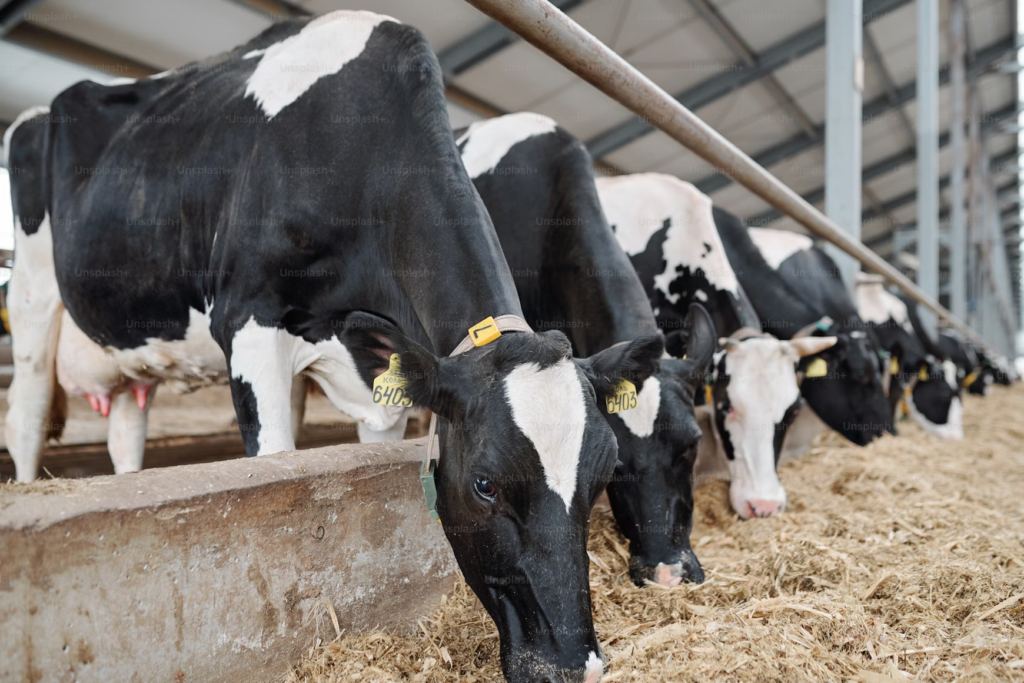
Bird Flu cases in U.S. Dairy Cattle (1,084+)

USDA reports 1,084 dairy cattle herds with confirmed H5N1 infections across 19 states.  

This count includes the recent detection of H5N1 in a Wisconsin dairy herd, the first for that state.

More H5N1 infections were reported in California in November, and in Idaho in October.  In September 2025, Nebraska reported it’s first H5N1 infection in dairy cattle.

The recent outbreak in Wisconsin was confirmed to be genotype D1.1. Further, genetic analysis indicated “this detection is a new spillover event from wildlife into dairy cattle, separate from previous events.”

In Nevada, cattle were reported infected with genotype D1.1 in December 2024 and January 2025.  This marked the first time that an H5N1 strain other than the B3.13 genotype infected cattle.  In February 2025, genotype D1.1 was reported in Arizona dairy cattle.

Other livestock infected with H5N1 include two pigs on a backyard farm in Oregon and an Alpaca in Idaho.  The pigs were infected with genotype D1.2

These are just confirmed infections.  The total is certainly higher.  USDA stated as much in its 12/6/24 announcement of mandatory testing of raw milk samples, noting that this will “help swiftly identify which states, and specific herds within them, are affected with H5N1.”

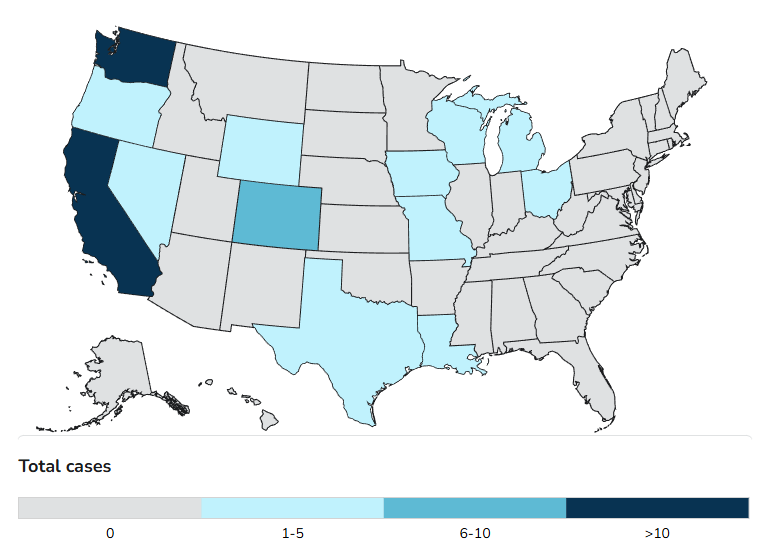
Bird Flu Cases in Humans (71+)

In November 2025, a case of H5N5 bird flu was identified in a Washington State resident, who unfortunately passed away from the infection. This was the first H5N5 human case reported.

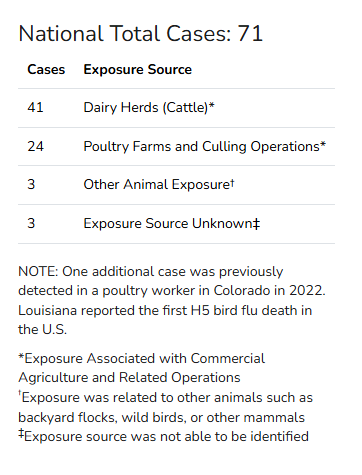
CDC now lists 71 H5 human cases in the official count. 

Ohio reported a human case on 2/12/2025 in a poultry farmer who had respiratory symptoms, was hospitalized, and recovered.  The Ohio H5N1 case is genotype D1.3.

Wyoming reported a human case on 2/14/2025, in a woman who was hospitalized, likely exposed to a backyard flock.

Nevada reported a human H5N1 case in a dairy farm worker who experienced conjunctivitis. 

The case count includes an H5N1 case in a child from San Francisco, California. According to the local public health alert, the child “experienced symptoms of fever and conjunctivitis but did not need to be hospitalized and has since fully recovered.”  The source of exposure is unknown.

*The California case is the third confirmed human case with an unknown source of infection.

The first human H5N1 fatality was reported on 1/6/2024 in Louisiana, in a patient who had been hospitalized.  On 12/18/24 the CDC announced that this was the first severe case in a human in the U.S.

*CDC’s count is an understatement. Not included in the official case count is a “presumptive positive” human H5N1 case reported in Wisconsin on 12/18/24. Also not included are 2 human H5N1 cases from Arizona reported on 12/6/24. Both were exposed at a commercial poultry farm and reported mild symptoms.  These are identified as “probable” human cases.   

There are so many “probable” cases that the CDC created a separate list for them, which totals 7 cases.  This includes a case reported in Delaware in an adult who developed respiratory symptoms” and sought healthcare.  Testing was positive for H5 at the state lab, but was negative for H5 virus upon PCR test at the CDC, and thus cannot be officially confirmed.  There was no known exposure to poultry, cows, or raw dairy.

Nor does the CDC count include the 8 mild or asymptomatic cases discovered by serological testing in Michigan, nor the close contact of the Missouri case who tested positive. 

Hot Topics & Recent Developments:

In 2022, a poultry worker was the first H5N1 human case in the U.S.  Since April 2024, there have been at least 71 cases of H5 bird flu, with 1 fatality. These are mostly in people exposed to cattle or poultry, with most getting mild symptoms. That H5N1 clade 2.3.4.4b viruses can infect humans directly from mammals is itself concerning and signals an evolution of this virus.  Read more on the ongoing scientific research for key insights into bird flu’s impact on human and animal health risks. 

The ongoing outbreaks of H5N1 clade 2.3.4.4b in U.S. dairy cattle herds grows more widespread every day.  So far 17 states have reported infected herds.  Studies done to date suggest the virus replicates at high levels in the mammary gland of cows and that the respiratory route is not the primary mode of transmission between herds (although it’s possible).  Read more to learn about what is being done to ensure the safety of the milk supply and livestock on infected farms.

H5N1 clade 2.3.4.4b viruses have caused a substantial number of outbreaks in more mammals than ever, leading to massive mortality in sea mammal groups like seals and sea lions.  H5N1 has infected hundreds of terrestrial mammals, typically leading to severe symptoms and death.  Read more to learn more about the devastating impact these outbreaks have had and what scientists are learning about the virus as it continues to spread through new hosts.

For more bird flu updates and analysis on key bird flu studies, be sure to read my articles and follow me on social media. 

Feel free to reach out to me with comments or to nerd about about all things bird flu!