In an unfortunate and interesting twist in bird flu news, a person from Washington State has died of H5N5, a strain of bird flu. While we have seen ongoing news coverage of H5N1, which has been circulating the globe for several years now, this is the first report of a human case of H5N5 bird flu, which sadly also turned out to be the first fatal human H5N5 bird flu case
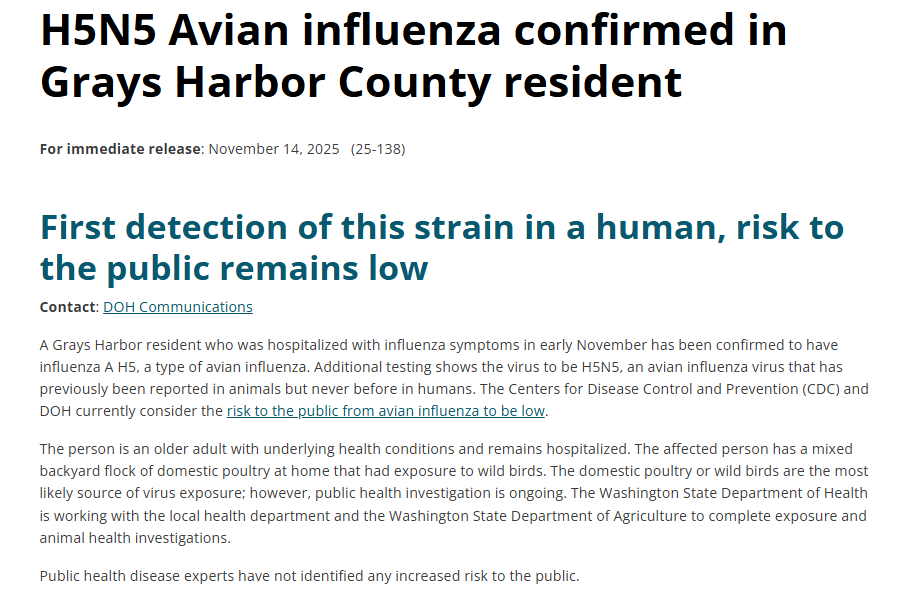
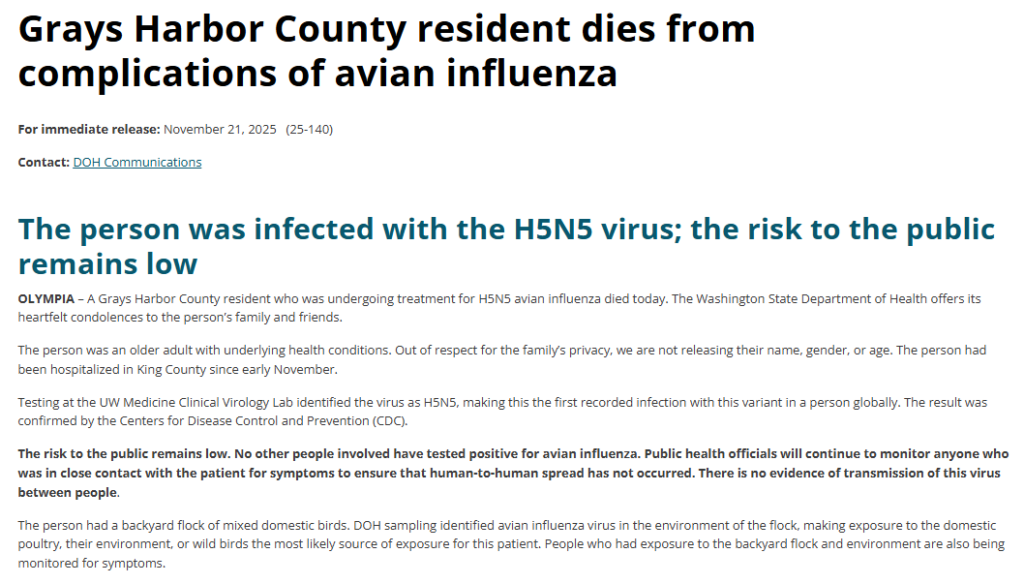
The Washington state department of health previously reported a novel H5N5 infection in a resident on November 13, 2025. We still don’t know much about this person other than they were an “older adult” with “underlying health conditions conditions” who was hospitalized “with influenza symptoms” earlier this month.
On November 21, 2025, the health department reported that the patient unfortunately died. Details are lacking on this case. We don’t know much about the progression of disease or clinical picture while this person was hospitalized.
First Ever H5N5 Human Case
Not only is this the first fatal human H5N5 bird flu case, but it is the first time H5N5 has infected a person, at least as far as we know. So the first reported H5N5 human case was also severe enough to require hospitalization and ultimately lead to the person’s death. That’s concerning.
How did this person become infected with this rarer strain of bird flu?
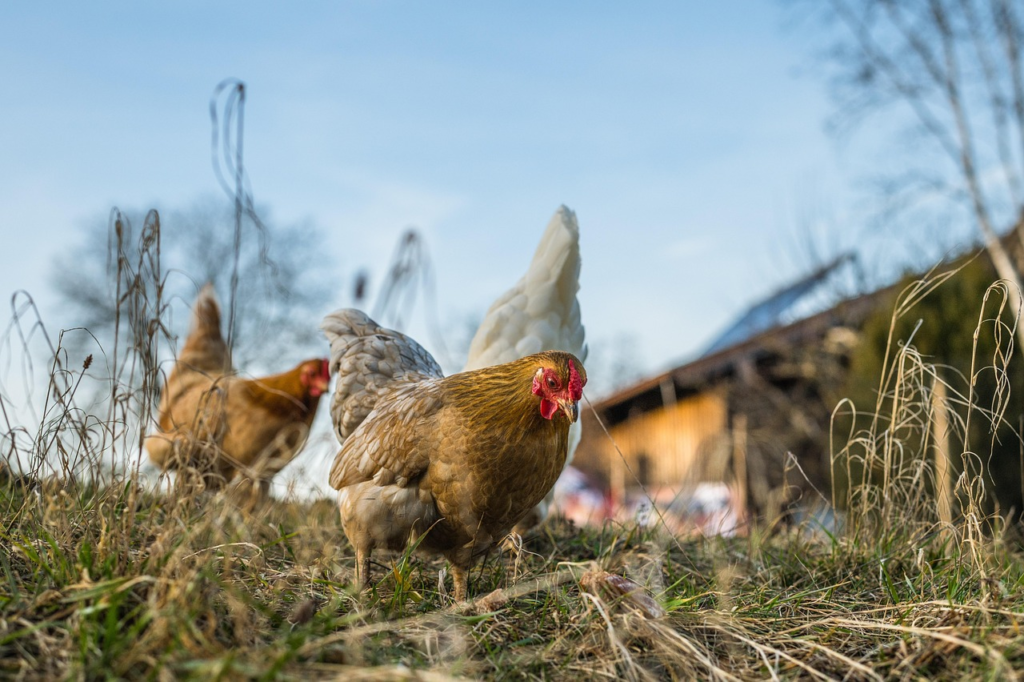
This person apparently had “a mixed backyard flock” at their home. But what type of mixed flock? Are we talking chickens and turkeys, or ducks too? As to the mode of transmission here, the backyard flock is believed to have had “exposure to wild birds.”
So at this point, the presumption is that wild migratory birds carrying the H5N5 virus somehow infected this person’s own backyard flock, which then somehow passed on the infection, leading to the first fatal human H5N5 bird flu case.
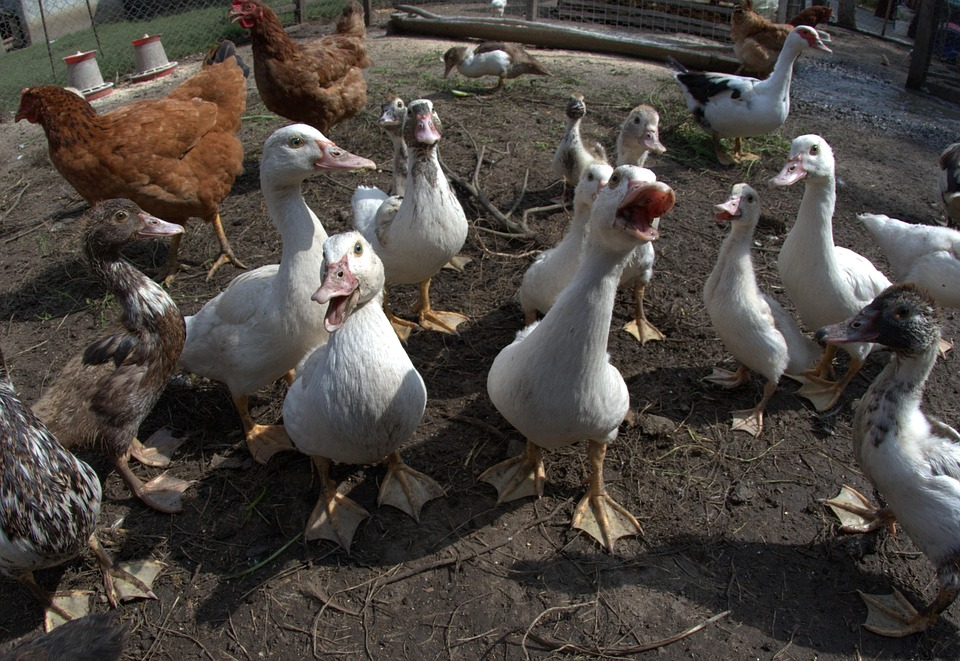
Having a backyard flock is already a known risk factor for avian influenza exposure. Indeed, we saw this with the first death from H5N1 in the United States, in a Louisiana man with a backyard poultry flock. (See The First Fatal Case of H5N1 Bird Flu in the U.S.). But what kind of flock did the Washington State resident have? What kind of wild birds did that flock interact with? More importantly, what interactions did this person have with their flock that led to them getting severely ill? There is still so much we don’t know about these human cases involving backyard poultry, and without more information it is difficult to fully evaluate the risks.
The H5N5 Bird Flu Virus
H5N5 is a different bird flu virus than the H5N1 virus that has been center stage for several years. Although the way I think about it, any H5 bird flu virus is a virus to be cautious of.
Importantly, we know from genetic sequencing that the H5N5 virus in this case was not the result of H5N1 mutating into something new. Instead, the H5N5 virus that infected the person in Washington is closely related to H5N5 viruses known to circulate in wild birds. (For further reading on H5N5 I really liked this study: Multiple transatlantic incursions of highly pathogenic avian influenza clade 2.3.4.4b A(H5N5) virus into North America and spillover to mammals, Cell Reports (July 2024)).
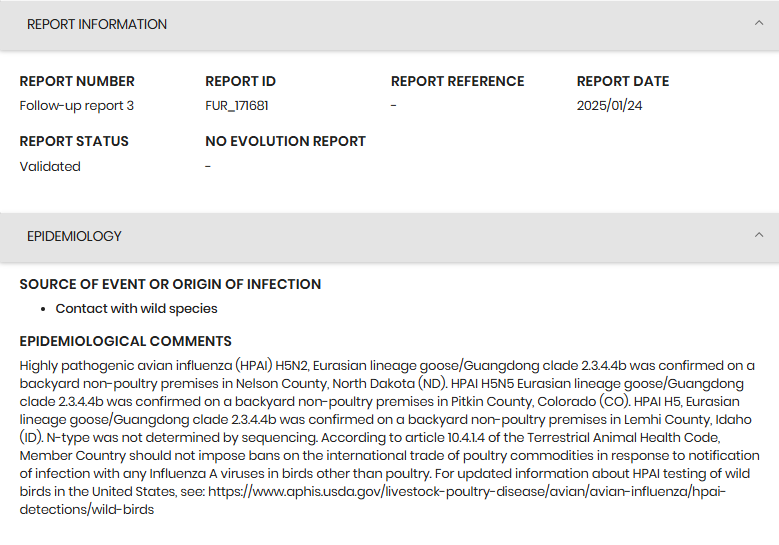
What strikes me here is why now? H5N5 has been documented in migratory birds before, but this is the first reported spillover into a human, ultimately leading to the first fatal human H5N5 bird flu case. Even reports of other H5 viruses in backyard flocks were scarce, although they did happen. Indeed, this past January, various H5 virus strains were found in domestic flocks in the United States, including H5N5. As noted on the legendary WAHIS dashboard, H5N5 bird flu was noted in a Colorado flock:
But is there more H5N5 virus circulating now? Why now? Does this recent human spillover suggest that H5N5 has somehow become more fit to circulate widely in wild birds, then travel down the pacific flyaway where those birds interact with poultry in a Washington backyard? Or have H5N5 viruses been doing this already, we just haven’t had a human case, let alone a fatal human case, until now?
These are some of the many questions that have erupted with this first fatal human H5N5 bird flu case. I hope we find out as much information as possible, as it will only help prepare for what may be coming.
No Additional Human H5N5 Cases Found
The good news was that the person infected with H5N5 from the backyard flock did not appear to infect anyone else, i.e., no human to human transmission. As the press release above notes, the risk of further infections as well as spread between humans is considered low.
There were, however, some interesting tidbits from that press release, such as:
“The risk to the public remains low. No other people involved have tested positive for avian influenza. . . . ” – No other people “involved”? Involved in what exactly? That just seems vague to me. If this refers to involvement in caring for the backyard flock, what type of involvement are we talking about? How did that involvement differ from the person’s involvement who was infected and ultimately died? If that patient had more extensive contact with the flock, the details of the nature of that contact are the details people need to fully understand the risks involved in keeping backyard poultry.
“DOH sampling identified avian influenza virus in the environment of the flock, making exposure to the domestic poultry, their environment, or wild birds the most likely source of exposure for this patient. People who had exposure to the backyard flock and environment are also being monitored for symptoms.” – So is this a case where H5N5 was in the environment and infected a human? Whenever I see mention of bird flu “in the environment” my sense of unease grows a little, as that is much more broad than simply having exposure to a sick flock. The relevant “environment” encompasses everything from the grass these birds may have walked on to the feed they ate to the water sources around the area. Moreover, it also says that people “who had exposure” to either the flock or the environment are being monitored. How many people is that? What were they doing? What type of environment are we talking about here? Why would it be either/or, as in there could be someone who had no contact with the flock but had contact with the environment?
So many questions. Hopefully we get answers to some of them. But as prior cases have shown, we typically won’t always know the full story of how and why a person was infected with bird flu.
This leads to the preparedness problem. Without the full picture, it makes preparedness that much more difficult. It makes evaluation of risk more difficult. We don’t even know if the person with the backyard flock knew of all the risks. Hopefully we learn as much as we can from this fatal human H5N5 bird flu case, which marks yet another grim milestone in the journey bird flu has taken over the past few years.
Until next time.